

Gold Mining
Pact works in partnership with gold mining communities and governments to professionalize the sector and create positive, sustainable social and economic impact.
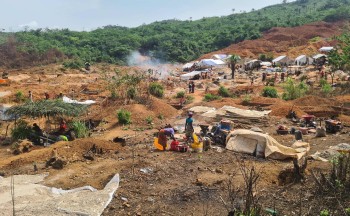
Artisanal and small-scale gold mining, or ASGM, produces about 15 percent of the world's newly mined gold. At least 16 million people make a living through ASGM, including more than 4.5 million women. Another 80 million people indirectly depend on ASGM, in view of the sector’s positive economic spillover effects in rural, impoverished communities.
Besides this socio-economic importance, the sector is an important pillar of stability in fragile and conflict-affected settings where it tends to thrive. For example, ASGM offers marginalized youth an alternative to joining criminal or extremist groups and provides local governments with critical revenue for development.
An inclusive formalization of this largely informal sector can unlock its full peacebuilding and sustainable development potential, with positive impacts on each of the 17 Sustainable Development Goals.
However, due to its informal nature and limited access to support services, gold mining is associated with numerous social, environmental, and health impacts. For example, many gold miners use hazardous chemicals such as mercury and cyanide to extract gold from its ore.
In some 70 countries worldwide, artisanal gold miners add mercury to crushed rocks or sediment containing gold. The mercury binds with gold particles like glue, creating a mixture called an amalgam. The amalgam is then heated to evaporate the mercury, leaving the gold behind. Inhaling mercury fumes poses the greatest danger to miners and their families. Extreme contamination can lead to organ failure and death, and pregnant women can pass exposure to their babies, causing neurological and developmental abnormalities.
By endorsing the Minamata Convention on Mercury, the global community has agreed to take action to reduce and eventually end mercury use in ASGM. But making this happen isn’t simple. No single, non-toxic alternative currently exists to replace mercury, and mercury bans risk depriving rural communities of this critical livelihood.
Cyanide is the current large-scale mining industry standard for gold extraction from milled ore. While cyanide can be used safely with rigorous safeguards, in practice the process presents considerable risks to workers, communities, and the environment.
At the same time, from the eastern Democratic Republic of Congo to the Central Sahel, non-state armed groups exploit informal gold supply chains to finance armed conflict and by criminal networks to launder money. The unprecedented spike in gold prices – which have almost tripled between 2017 and 2025 – strengthens the precious metal’s links with both conflict financing and its positive development impacts in impoverished communities and fragile nations.
What we do
Pact is taking a holistic approach to support gold miners and traders in professionalizing their livelihoods to reduce ASGM’s dangers and ensure positive social, economic, and environmental impacts in rural communities. Working with communities, governments, and private partners, Pact leverages market forces for the sustainable transformation of gold mining in sub-Saharan Africa, Latin America, and Asia.
In Mali, with funding from the U.S. State Department, we are supporting ASGM formalization, strengthening transparent gold supply chains, and reducing mercury use. Through our field research we uncovered that as much as 151 tonnes of gold was smuggled out of the country in 2021 alone, and we have consequently partnered with government, private sector, and civil society stakeholders to develop Responsible Gold Trading Policy Paper for formalizing gold production and trading and preventing terrorism financing. Upon recommendation of the Prime Minister’s Office, Pact and the Ministry of Mines established a multi-stakeholder mechanism in 2024 to coordinate the implementation of the nationally validated policy paper, institutionalizing good mineral governance efforts in Malian society.
In Sierra Leone, the government has developed a National Action Plan to reduce mercury use in the ASGM sector through formalization, introduction of better mining practices, and advancing gender equality in ASGM communities. In partnership with GIZ, since 2021, Pact has supported stakeholders in implementing the NAP by promoting responsible gold production and trade and improved, formal market access for ASGM miners and gold traders. As part of these efforts, Pact has, for example, helped establish Sierra Leone’s first formal ASGM associations, and partnered with local manufacturers to establish and demonstrate the country’s first mercury-free gold processing plant using local equipment.
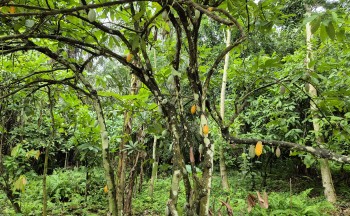
In Ghana, Pact recently completed a U.S. State Department-funded project focused on mercury reduction through education, the introduction of better technology, strengthened supply chains, and business incentives for mercury-free gold production. In 2025, Pact partnered with the Chocolonely Foundation, Solidaridad and the Ghana Cooperative Cocoa Farmers and Marketing Association (GCCFA) to kick-start "Shared Ground," a pilot project seeking to mitigate land conflicts and enhance social cohesion between Ghanian ASGM miners and cocoa farmers.
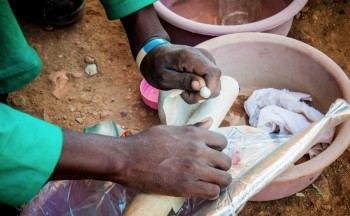
In Zimbabwe, Pact piloted low-cost fumehoods and retorts to reduce mercury use and exposure, and delivered education and practical training to gold miners and refiners. Likewise, in Nigeria and Mauritania, Pact worked with local fabricators and miners to test more efficient mineral processing equipment including improved sluicing to better capture fine gold in Nigeria, and entire mineral processing facility including shaker tables, jaw crushers, and wet-pan mills in Mauritania.
To address the use of cyanide in ASGM, in partnership with planetGOLD, Pact has produced guidance on cyanide management written specifically for the artisanal gold mining sector worldwide. The guide aims to ensure that the risks of cyanide are well understood and that regulators and users have accurate information and training to ensure their compliance with regulations formulated to mitigate the health, safety, social, and environmental risks.
With support from the U.S. State Department, Pact recently commenced a pilot project on introducing responsible cyanide use in Tanzania’s Geita region.
Gold Mining PROJECTS
-
-
 Past Project
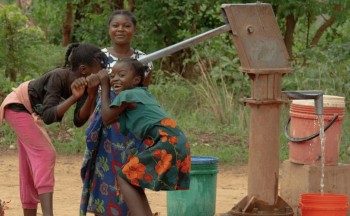
Watoto ni Hazina (Children are Treasure)
Country: TanzaniaFunder: U.S. Department of Labor -


OUR LATEST NEWS
-
 News
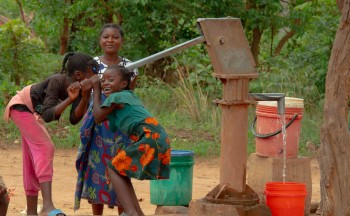
NewsPact and partners discuss next steps for National Action Plan pilot in Sierra Leone
Jan 14, 2025 -
 News
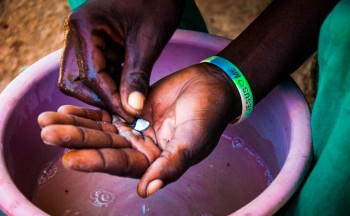
NewsPact receives grant to combat child labor in artisanal and small-scale gold mining in Tanzania
Dec 20, 2024 -
 News
NewsPact receives new funding to expand artisanal and small-scale gold mining work in Africa
Dec 04, 2024


Gold Mining Resources
-
Project bulletin: Piloting NAP implementation in Sierra Leone (February 2025)
-
Piloting NAP Implementation in Sierra Leone
-
Mercury-free techniques for the processing of gold ores in the artisanal and small-scale gold mining sector in Mauritania
-
Responsible gold mining at Pact
-
Fact sheet: Promoting Mercury-Free Mali
Stay Updated. Subscribe Now.
Pact's e-newsletter offers the latest on our efforts around the world to build thriving, resilient and engaged communities that are leading their own development.
